
- News
- City News
- mumbai News
- First Indian to ski solo to South Pole battled mental health struggles
Trending
First Indian to ski solo to South Pole battled mental health struggles
San Francisco-based mountaineer Satish Gogineni became the first Indian to ski solo and unsupported from Hercules Inlet to the South Pole. His journey, part of Project Spandana and dedicated to his cousin who died by suicide, also highlighted his personal struggles with mental health and his mission to remove the stigma around it.
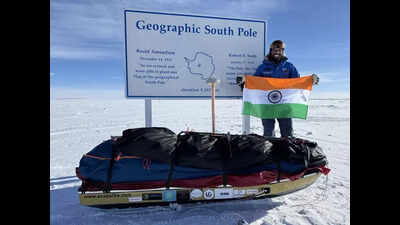
‘History made at the South Pole,’ posted Satish Gogineni after his feat
The expedition, part of Project Spandana, was dedicated to his cousin, who died by suicide three years ago. "My goal is to remove the stigma around the word 'mental' by being an example," says Gogineni, a former financial risk manager who also lost his mother to suicide. Their deaths shaped his struggles with mental health and shattered his own stigma around seeking help. "People saw me as a happy-go-lucky person, but they didn't know about my anxiety, depression, and suicidal tendencies," he says.
In 2022, Gogineni—then a financial risk manager—had just finished a climb in Wyoming's Wind River Gorge when he got the call about Spandana. She was found hanging, just like his mother in 2011. His family realized too late that she had been silently enduring mental and physical abuse from her husband for 15 years. "She married the love of her life against her father's wishes, but was stuck in an abusive marriage, financially supporting her family. I believe I could have saved her had I been vocal about my own struggles."
His mother's death had been equally painful: "Every year around her death anniversary, my anxiety worsened." When he moved to the US for higher studies, she would call him "crying for help". Though never officially diagnosed, she had endured immense struggles: a traumatic accident at a temple, the loss of her grandmother and father, menopause, and unspoken mental health issues. Losing her made running cease being therapeutic, says Gogineni who found solace in mountaineering.
Training for big peaks became his new refuge. In 2022, after his Everest-Lhotse double summit, he discovered British explorer Preet Chandi's Antarctic expedition. "She travelled across Antarctica solo, and I was fascinated by what she had achieved in a big continent in solitude." Soon, he was dragging tyres across beaches and parks to prepare for the South Pole. He underwent polar training in Baffin Island and Greenland, gained weight for insulation, and secured funding from backers, including mountaineer Milind Kaskar and tech entrepreneur Vivek Mehra. The expedition cost over Rs 1 crore.
For 51 days between Nov 2024 and Jan 2025, he skied in -37°C, battling zero visibility and 70 km/h winds. Towering sastrugi formations (snow sculptures formed by winds) slowed him down, and he developed "polar thigh"--a condition that chafed his lower half, making each step agonising. "I felt protected by my mom when I was out there," he says. Despite the pain, Gogineni finished two days ahead of the other expedition members. Ten days after raising the tricolour at the South Pole, Gogineni returned to sunny San Francisco only to find himself on thin ice. He had been sacked. His bank had denied his leave request, and his decision to go cost him his job. "I'm unemployed at the moment," says Gogineni, unfazed.
End of Article
FOLLOW US ON SOCIAL MEDIA
Visual Stories






Photostories

Hot Picks
TOP TRENDING
Explore Every Corner
Across The Globe
USAID FundingIND vs PAKIrina ShaykRanveer AllahbadiaLos Angeles LakersAuston MatthewsIND vs PAK RecordPM Giorgia MeloniBabar AzamHardik PandyaVirat KohliIND vs PAK Celebrity ListHow to Watch IND vs PAK LiveCooper FlaggTyreek HillYoutuber Fukra InsaanJoe BurrowLebron JamesMagic JohnsonJimmy ButlerRanveer AllahbadiaPakistan vs India ScoreAnthony DavisIndia Vs Pak Match TimeIND vs PAK Head to HeadChampions Trophy Live Streaming in USAChampions Trophy Points TableChamopions Trophy Live Streaming in CanadaChampions Trophy ScheduleICC Champions Trophy Live Streaming
Hot on the Web
Aamir KhanAishwarya RaiCancer SymptomsDragon Box Office CollectionMere Husband Ki Biwi Movie ReviewKaroline LeavittVirat KohliMere Husband Ki Biwi CollectionTurmericLizzos Weight LossRoadies XX Contestants ListOceanOrryChhaava Box Office CollectionKaun Banega Crorepati 16Mahashivratri 2025Chhaava Movie ReviewKareena KapoorOptical illusionRanveer AllahbadiaAnimal SpeciesBaby GirlWild NepalWild AnimalsCloves Health BenefitsIndian Wildlife DestinationsPumpkin SeedShakespeares QuotesCherry TomatoesWhite Lions
Trending Topics
India vs Pakistan Live ScoreIndia vs Pakistan Match Weather ReportIND vs PAK Playing XIHow to Watch IND vs PAK MatchRRB Group D ApplicationTS Inter Admit CardAP Inter Hall TicketMS DhoniBabar AzamHardik Pandya vs Babar AzamSarfaraz AhmedVirat KohliHKU5-CoV-2Elon MuskFederal LayoffsSalman KhanNyt StrandsAIIMS CRE Admit CardNyt ConnectionsKing Legacy CodesDa Hood CodesWordle HintsFort Knox Gold ReservePAK Cricket TeamIND vs NZ Head to HeadIND vs PAK Head to HeadIND vs PAK Champions TrophyChampions Trophy Live Streaming in USAChampions Trophy Live Streaming in CanadaICC Champions Trophy 2025 Live Streaming
Popular Categories
HeadlinesSports NewsBusiness NewsIndia NewsWorld NewsBollywood NewsHealth+ TipsIndian TV ShowsTechnologyICC Champions TrophyIPLTravelEtimesHealth & FitnessHollywood NewsWeb SeriesWWEUS NewsNFLIndia vs Pakistan Head to HeadIndia Vs New Zealand Head to HeadIndia vs Bangladesh Head to HeadCBSETechnology NewsInternational SportsAstrologyPublic HolidaysBank HolidaysTOISAMedithon
Latest News
‘Dragon’ box office collections day 3: Pradeep Ranganathan’s film roars past Rs 28.80 cr mark in IndiaKahani Ghar Ghar Ki's Sakshi Tanwar, Shweta Kawatra, Sucheta Trivedi and others reunite; Manav Gohil drops a hilarious video on what has changedPlanning to get back with your ex? Ask yourselves these questions first!PM Modi hails Isro's century in rocket launches, urges people to dedicate a 'Day for Science'Massive volcanic catastrophe could hit the Pacific NorthwestTamil Nadu teacher hits student for not reciting Hindi poem, suspendedWhat's next for Matthew Stafford? The LA Rams have given him permission to speak to other teamsTaylor Swift faces backlash as Instagram, losses over 144,200 followers following her booing at the Super BowlWith Atishi leading oppn, Delhi gets India's 1st woman CM-LoP comboAAP government has left 'entire exchequer empty': Delhi CM Rekha GuptaNumber of bn-$ GCCs doubles in 5 yearsProperty Share holding co Alt to raise Rs 2.8k croreMom of three dies days after cancer diagnosis after two crucial signs were missedKKR to buy 51% in oncology hospital HealthCare Global'My job was clear': Virat Kohli explains strategy after yet another run-chase masterclass vs PakistanBill direct attack on autonomy of legal profession: M K StalinDonald Trump administration fires 2,000 USAID workers, puts thousands on leaveFacing lawyers’ ire, government withdraws draft advocates bill
Copyright © 2025 Bennett, Coleman & Co. Ltd. All rights reserved. For reprint rights: Times Syndication Service